How Does Hem Brewing Support Small and Large Brewery Growth?
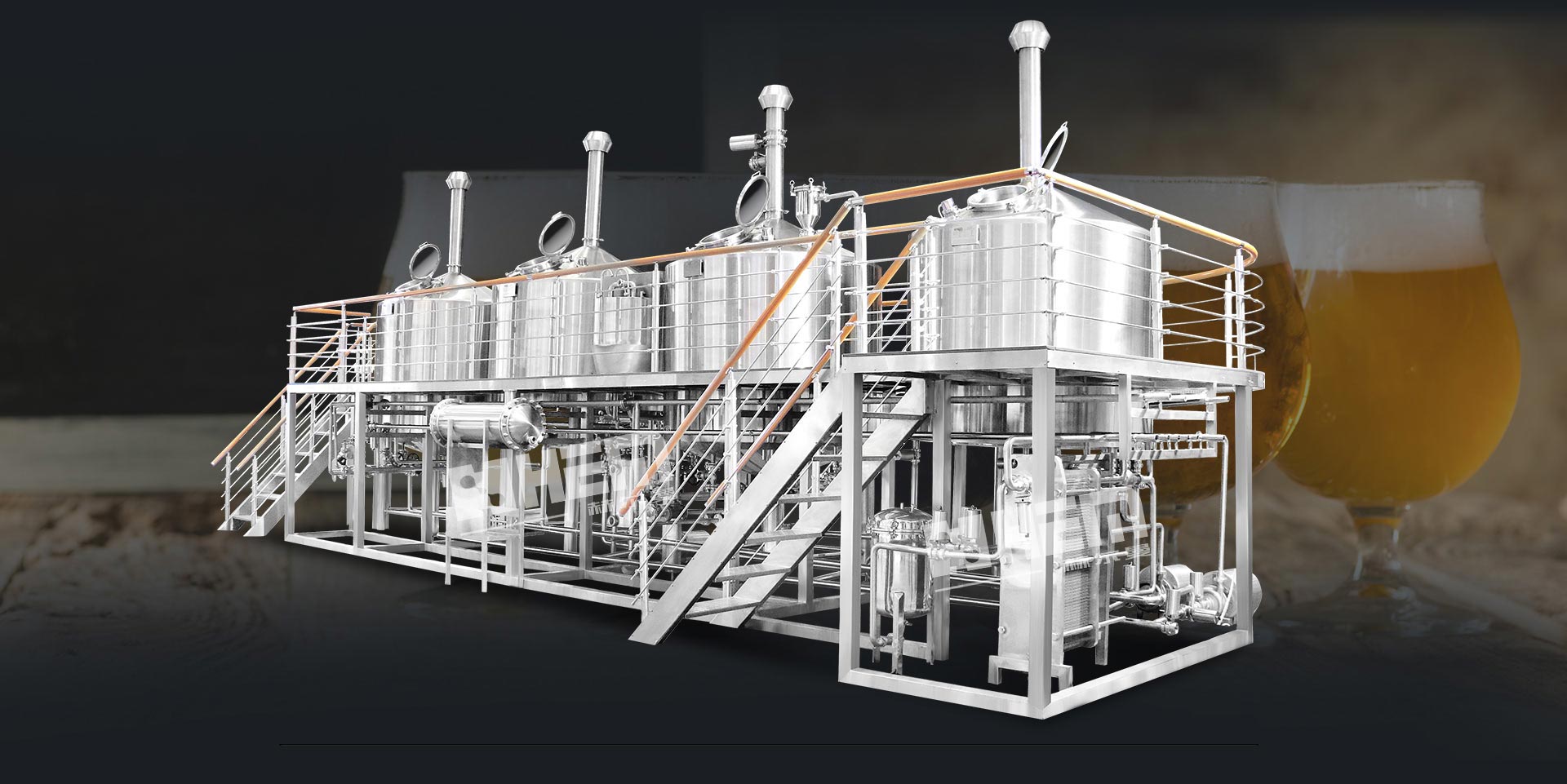
Hem Brewing supports brewery growth by matching equipment capacity to production volume, cellar turnover, packaging needs, and later expansion. The U.S. had 9,796 operating craft breweries in 2024, while craft production fell 3.9% to 23.1 million barrels, making efficient capacity planning more important than simply adding tanks. A small taproom may start with a 5–10 BBL brewhouse and several unitanks, while a larger production brewery may require 30–60 BBL batches, multiple daily brews, automated controls, glycol distribution, CIP equipment, and a larger fermentation cellar. Hem Brewing can support both operating models through configurable brewhouses, fermentation vessels, bright beer tanks, utilities, controls, and packaging-related equipment, giving breweries room to increase output without rebuilding every production stage at the same time.
A brewery’s equipment plan starts with annual sales rather than the largest brewhouse that fits inside the building. In 2024, U.S. craft beer represented 13.3% of beer volume but 24.7% of retail dollar sales, while craft retail value reached about $28.8 billion. Those numbers show why smaller producers may prioritize product mix and taproom service instead of maximum batch volume.
For example, a 10 BBL brewhouse producing one batch per brewing day has very different requirements from the same brewhouse operating two turns per day. At 31 U.S. gallons per barrel, a nominal 10 BBL batch represents about 310 gallons before normal process losses. A brewery planning 2 turns per day therefore needs cellar capacity, cooling capacity, pumps, piping, hot-water storage, and labor sized around the brewing schedule rather than the brewhouse nameplate alone.
That distinction matters when selecting hem beer equipment. A brewery can pair its brewhouse with fermentation vessels sized for single batches, double batches, or different product families. A 10 BBL brewhouse, for instance, can feed 10 BBL fermenters for frequent recipe changes or larger vessels when higher-volume beers justify combining brews.
Cellar capacity often determines practical output before brewhouse size does. A brewhouse can finish another batch in hours, while beer may occupy a fermentation vessel for days or weeks.
Consider a simplified cellar example. Six 10 BBL fermenters provide 60 BBL of nominal fermentation capacity, while twelve provide 120 BBL. If the average tank remains occupied for 14 days, adding fermentation capacity can increase the number of batches moving through the plant without replacing a serviceable brewhouse. Tank geometry, working volume, cleaning time, beer style, fermentation schedule, and conditioning requirements still have to be included in the actual production plan.
This staged approach suits a market where demand cannot be assumed to rise every year. U.S. craft production decreased 3.9% in 2024, and 529 craft breweries closed while 430 opened. The closure rate was about 5%, according to the Brewers Association. Equipment expansion therefore works better when it follows measured throughput, tank utilization, sales mix, and packaging requirements.
| Brewery stage | Typical equipment planning focus | Capacity issue to check |
|---|---|---|
| Small taproom | 5–10 BBL brewhouse, unitanks, glycol cooling | Fermenter availability |
| Growing craft brewery | 10–30 BBL system, larger cellar, CIP support | Multiple brews per day |
| Regional producer | 30–60+ BBL brewhouse, automated controls | Utilities and packaging |
| High-volume plant | Multi-vessel production, large tank farm | Throughput across the full line |
The table also explains why modular design matters. Increasing fermentation capacity by 50% does little if the glycol chiller cannot handle the additional heat load, just as installing a faster brewhouse does little when the packaging line remains occupied for most of the working week. Hem Brewing can approach expansion as a connected system covering vessels, cooling, heating, controls, transfer equipment, and cleaning requirements rather than treating every tank as an isolated purchase.
Utilities deserve particular attention because water use rises throughout brewing, cellar work, packaging, cleaning, and facility operations. Brewers Association material citing BIER data reports a brewery water-use sample of 211 facilities, with historical water-to-beer ratios ranging from 3.26 to 7.44 liters of water per liter of beer and a reported 10% improvement across the referenced period.
For a brewery producing 1 million liters of beer annually, moving from 6.0 L/L to 4.5 L/L would reduce gross water use by roughly 1.5 million liters per year. Actual results depend on packaging, cleaning procedures, equipment design, wastewater practices, and production mix, but the calculation shows why spray devices, properly sized CIP systems, controlled rinsing, heat recovery, and accurate process scheduling deserve attention during equipment specification.
Cleaning also connects small-brewery flexibility with large-brewery efficiency. A startup may clean vessels with relatively simple portable equipment, while a larger plant can benefit from dedicated CIP vessels, repeatable chemical concentration, controlled temperatures, timed cycles, and planned return paths. A 2024 brewery running several fermenters can tolerate more manual handling than a plant operating dozens of tanks every week.
Repeatable cleaning is not only a sanitation matter. It affects tank turnaround time, water use, chemical consumption, staff hours, and how quickly a vessel becomes available for the next batch.
Process control becomes more important as batch frequency rises. A brewer manually monitoring one 5 BBL batch can make adjustments without much production disruption; managing multiple 30 BBL batches across mash, wort transfer, fermentation, cooling, and cleaning creates more opportunities for timing and temperature differences. Automated temperature control, pump management, valve control, level monitoring, and recorded process data can reduce operator intervention where repeatability matters.
The need for better utilization is supported by the wider market. U.S. beer shipments fell 1.6% to about 193 million barrels in 2024 and were about 10% below 2021 levels. Large breweries therefore have a reason to evaluate throughput per production hour, energy per barrel, water per barrel, labor hours, packaging losses, and tank occupancy rather than assuming that more installed volume will produce better economics.
Small breweries face a different version of the same issue. Microbrewery production declined 7.5% in 2024 to about 3.79 million barrels, compared with 4.1 million barrels in 2023 and 4.6 million in 2022. A smaller producer may therefore prefer several appropriately sized fermenters over one oversized vessel, allowing a lager, IPA, seasonal beer, and low-volume specialty release to occupy separate tanks.
Packaging changes the equipment calculation again. A brewery selling mostly draft beer may place more attention on kegging, cold storage, and bright beer capacity, while wider retail distribution adds cans or bottles, conveyors, labeling, carbonation control, and larger finished-product storage requirements. In 2024, 3,936 U.S. craft breweries were classified as taproom breweries, compared with 2,029 microbreweries and 279 regional craft breweries. The production layout should therefore follow the brewery’s sales route rather than a generic equipment list.
Hem Brewing’s role can extend from individual tanks to a coordinated production layout. Early planning should establish brewhouse output, fermentation days, target annual volume, number of beer styles, packaging split, available floor area, ceiling height, drainage, electrical service, steam or other heating arrangements, glycol requirements, water supply, and anticipated expansion.
For a 10 BBL brewery expecting 50% production growth over several years, leaving physical and utility capacity for additional fermenters may cost less than relocating pipework and cooling infrastructure later. For a 60 BBL facility, the same planning principle applies at a different scale: piping routes, valve arrangements, CIP coverage, platform access, automation, and tank-farm expansion space can affect how easily another production stage is added.
Equipment material and fabrication also matter over long operating periods. Commercial brewing vessels commonly use stainless steel because brewing requires repeated exposure to water, cleaning chemicals, temperature changes, and sanitary processing. Vessel specification should address working pressure, jacket arrangement, insulation, weld finish, fittings, manways, spray devices, ports, and applicable local pressure-vessel or electrical requirements rather than focusing only on nominal liters or barrels.
The commercial environment makes that level of planning relevant to breweries of every size. The number of U.S. craft breweries reached 9,796 in 2024 but fell to 9,578 in 2025, a 2.9% decrease, according to Brewers Association historical data. Equipment purchases therefore need to support measurable production requirements: batches per week, saleable volume, tank turns, cleaning hours, water ratio, energy use, packaging rate, and planned annual output.
A small brewery can begin with fewer vessels and add cellar capacity as sales develop; a larger operation can use additional automation, larger vessels, improved utility systems, and more structured CIP processes to handle greater throughput. The useful measure of brewery equipment is not how large the system looks, but how many consistent, saleable barrels it can produce with the available tanks, utilities, labor, floor space, and operating hours.