Can a Plywood Supplier Provide Custom Plywood Sizes?
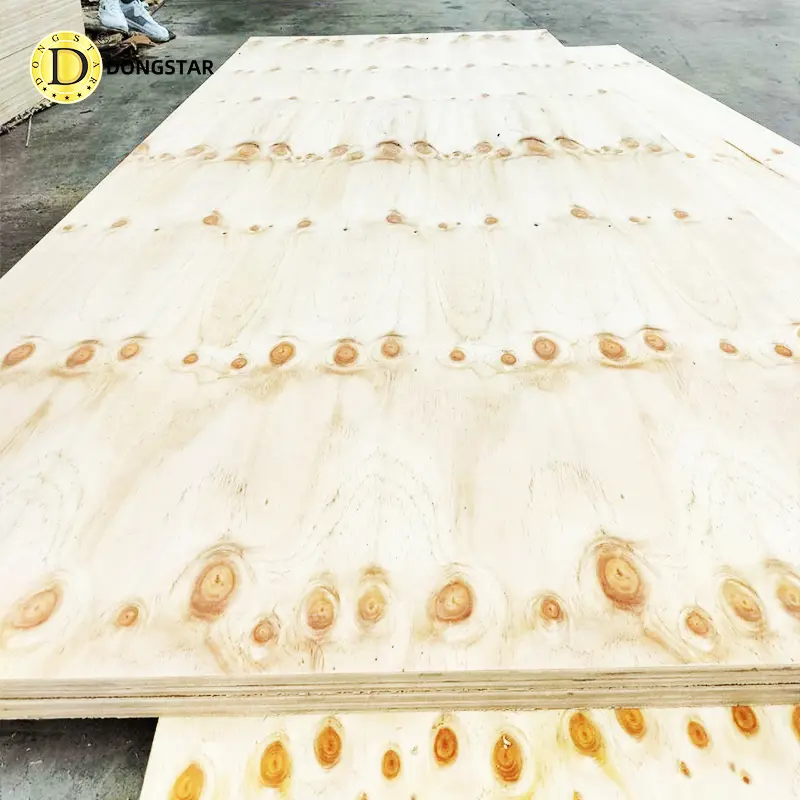
Yes. A plywood supplier can provide custom panel sizes when its press, veneer-jointing, trimming, sanding, and packing equipment can handle the requested dimensions. Standard export panels are commonly 1220 × 2440 mm or 1250 × 2500 mm, while larger formats such as 1500 × 3000 mm and 1525 × 3050 mm are available from some factories. Custom orders may also specify thickness, tolerance, veneer species, glue class, face grade, sanding, CNC cutting, and packaging. For a factory using 10,000 panels a year, improving cutting yield from 80% to 86% would reduce purchased sheet area by roughly 7%, so panel size can affect total material cost as much as the quoted sheet price.
Most custom orders begin with a simple question: does the buyer need a different sheet size, or a finished component cut from a standard panel? The two requests use different production methods. A 600 × 1200 mm component can usually be cut from a 1220 × 2440 mm sheet, while a 1500 × 3000 mm panel may require a production line designed for larger veneers, presses, sanding machines, and handling systems.
Cut-to-size work is normally easier because the supplier starts with an existing panel. The factory cuts, squares, checks, stacks, and packs the required pieces. If a 1220 × 2440 mm panel produces four usable components with 92% material use, the remaining 8% consists of kerf, trim loss, defects, or offcuts. For repeat orders, even a 3% reduction in waste can matter when annual consumption reaches several thousand cubic metres.
Made-to-size production is different because the panel dimensions are considered before pressing. Veneer sheets or veneer strips are arranged for a specified length and width, adhesive is applied, the lay-up is assembled, and the panel enters the hot press before trimming and sanding. A buyer ordering 2,000 identical panels may therefore receive a format closer to the dimensions used on the production line instead of paying for unwanted area on every standard sheet.
Press size places one of the clearest limits on custom production. A factory equipped mainly around 4 × 8 ft panels cannot simply produce a 5 × 10 ft sheet without suitable pressing and downstream equipment. Sanding width, saw travel, stacking space, forklift clearance, pallet size, and warehouse doors also have to match. A panel that can be pressed but cannot pass through a calibrating sander is not a practical production format.
Veneer availability creates another limit. Large face veneers with consistent appearance become more difficult to source as panel dimensions increase, especially when the customer requires a decorative face rather than an industrial surface. Manufacturers can join veneers, but joint placement, colour variation, grain direction, overlap, gaps, and repairs need agreed acceptance limits. In furniture production, a 2 mm visible veneer gap may be unacceptable even if the structural panel remains usable.
Thickness can also be customized, although buyers should separate nominal thickness from measured thickness. An order described as 18 mm plywood does not automatically require every point on every panel to measure exactly 18.00 mm. Veneer thickness, compression during hot pressing, sanding allowance, moisture content, and measuring position all affect the finished number.
European plywood specifications often refer to standards such as EN 315 for dimensional tolerances, EN 314-2 for bonding quality, and EN 636 for plywood use conditions. EN 13986:2004+A1:2015 is also widely referenced for wood-based panels used in construction. Buyers should name the applicable standard in the purchase specification instead of using phrases such as “European quality,” because a measurable requirement gives both parties a common inspection method.
For furniture or CNC production, tolerance can matter more than the nominal panel size. A router programmed for repeated parts may work with hundreds of sheets in one batch, so variation affects groove depth, edge alignment, hardware installation, and stacking. A buyer processing 500 panels per day may find that even a 0.5 mm thickness difference changes setup or finishing requirements when parts must fit into narrow grooves.
The requested size should therefore be linked to the final cutting pattern. Suppose one furniture part measures 580 × 720 mm. A standard 1220 × 2440 mm panel may leave strips that cannot be reused for the same product, depending on saw kerf and nesting orientation. If usable yield rises from 79% to 87% after changing the purchased panel format, the buyer needs about 9% less panel area to produce the same quantity of parts.
That saving should be compared with the extra manufacturing charge. A custom sheet may cost more per square metre because the supplier has to change press schedules, trimming settings, pallet dimensions, labels, quality records, or packaging materials. An 8% higher panel price can still be reasonable when downstream cutting waste falls by 10%, although freight, labour, machine time, and offcut disposal should also be included before comparing the two options.
Order quantity has a large influence on whether custom production is economical. Cutting 50 sheets from stock is very different from manufacturing 5,000 sheets in a dedicated dimension. Small orders often use standard parent sheets because tooling and production scheduling remain simple. Larger repeat orders give the manufacturer more reason to prepare a specific panel format, especially when the same thickness, glue system, grade, and packing method will be reordered several times a year.
A serious RFQ should therefore contain more than length × width × thickness. It should state the plywood type, face and back grade, core species, veneer construction, adhesive requirement, sanding, moisture expectation, permitted repairs, dimensional tolerance, quantity, packaging, application, destination, and required documentation. If the buyer needs 18 × 1180 × 2380 mm panels, writing only those three measurements leaves too many production variables unanswered.
Packaging deserves the same level of detail because custom dimensions change pallet geometry. A standard panel stack may fit common forklifts and warehouse racks, while a long or wide panel may require different battens, steel or PET strapping, corner protectors, wrapping, and loading orientation. A 40-foot container has fixed internal dimensions, so changing sheet length by only a few hundred millimetres can alter the number of packs that fit and the amount of unused container space.
Weight also matters. Plywood density varies with species, construction, moisture, and adhesive content. If a panel has an assumed average density of 650 kg/m³, an 18 mm sheet measuring 1.22 × 2.44 m contains about 0.0536 m³ of material and would weigh roughly 34.8 kg. Increasing both length and width increases sheet weight quickly, which affects manual handling, pallet limits, forklift capacity, and container payload.
Custom plywood may also include machining rather than size changes alone. Some factories can supply drilled, routed, grooved, profiled, or labelled components. A furniture producer using 20,000 identical side panels may prefer parts supplied close to assembly dimensions because local saw time and dust collection are reduced. The buyer should provide controlled drawings with revision numbers so an old file cannot be used after a design change.
Inspection should be agreed before mass production. A useful plan identifies sample quantity, measuring tools, measuring points, acceptance limits, appearance criteria, and reporting format. For example, checking 20 panels from a production lot gives more information than measuring only one sheet from the top of a pallet, although the correct sampling plan should match the agreed quality system and the commercial risk of the order.
The same approach applies to moisture, bonding, flatness, surface defects, and thickness. If the product will be laminated, painted, CNC-routed, or installed in a controlled factory process, samples should be tested under the same conditions before a large order. A 2026 purchasing program using several containers per month needs repeatability between batches, not simply one acceptable pre-production sample.
Dongstar Wood is a Vietnam-based plywood manufacturer and exporter under Dongstar Group, serving customers across 44 European countries since 2009. We specialize in commercial plywood, film faced plywood, construction plywood, birch plywood, furniture plywood, and customized plywood solutions.
Backed by CE 2+, FSC®, EUDR, DOP, and SEDEX (BSCI) certifications, we meet European standards for quality, sustainability, and compliance. With over 15 years of manufacturing and export experience, we support importers, distributors, furniture manufacturers, and construction companies with reliable plywood supply and OEM/ODM solutions.
When discussing a custom order with a Plywood Supplier, buyers should ask whether the requested panel will be manufactured in that size or cut from a larger parent sheet. The answer affects material yield, edge condition, MOQ, pricing, and lead time. A supplier cutting 1,000 small panels from standard stock may quote differently from a factory scheduling 1,000 made-to-size panels through veneer lay-up and pressing.
Oversized sheets need further discussion because transport can become more expensive before production cost changes significantly. A panel measuring 1525 × 3050 mm may reduce joints in shopfitting, vehicle interiors, large cabinets, or wall systems, but it also occupies more warehouse space and can require mechanical lifting. If breakage or corner damage rises from 1% to 3% because packs are difficult to handle, the larger format may lose part of its material-saving advantage.
Small panels have the opposite issue. They are easy to handle but can add cutting, sorting, counting, labelling, and packaging work at the factory. A buyer ordering 30,000 pieces of 400 × 600 mm plywood is purchasing a processed component, not simply sheet material. Unit pricing should therefore include machining and handling instead of being compared only with the square-metre price of full sheets.
Surface requirements can further change production planning. Film faced plywood, birch-faced furniture plywood, commercial plywood, and construction plywood may use different overlays, veneer grades, adhesives, sanding sequences, or press settings. A custom dimension that is easy for unfinished commercial plywood may require another production route when both faces need phenolic film or a selected decorative veneer.
Compliance documents should also match the actual product supplied. A certificate for one panel construction should not automatically be treated as proof for every thickness, glue type, face material, or end use. For construction-related purchases in Europe, buyers commonly check declared performance, product marking, applicable standards, and the exact scope of certification before approving a commercial shipment.
For repeat programs, buyers can reduce variation by fixing the approved specification after sampling. The document can state 1220 × 2500 mm, 18 mm nominal thickness, agreed dimensional tolerance, specified face grade, defined core construction, packing quantity per pallet, and inspection method. If a factory ships 12 containers a year, keeping the same specification across all 12 batches makes incoming inspection and production planning easier.
Price comparison should remain tied to usable output. If Supplier A offers standard sheets at €20 each and 82% of purchased area becomes finished parts, while Supplier B offers a custom format at €21.50 with 91% usable area, the second offer can have a lower material cost per finished square metre despite the higher sheet price. Freight, machining, rejection rate, storage, and labour still need to be added before purchasing terms are agreed.
Custom plywood sizes are therefore technically common but commercially dependent on equipment, quantity, tolerance, panel construction, machining, packing, and logistics. A buyer who provides exact dimensions together with annual volume, use case, drawings, standards, and inspection limits gives the manufacturer enough information to quote a product that can be repeated across later production batches.